
Climbing walls,
built for schools
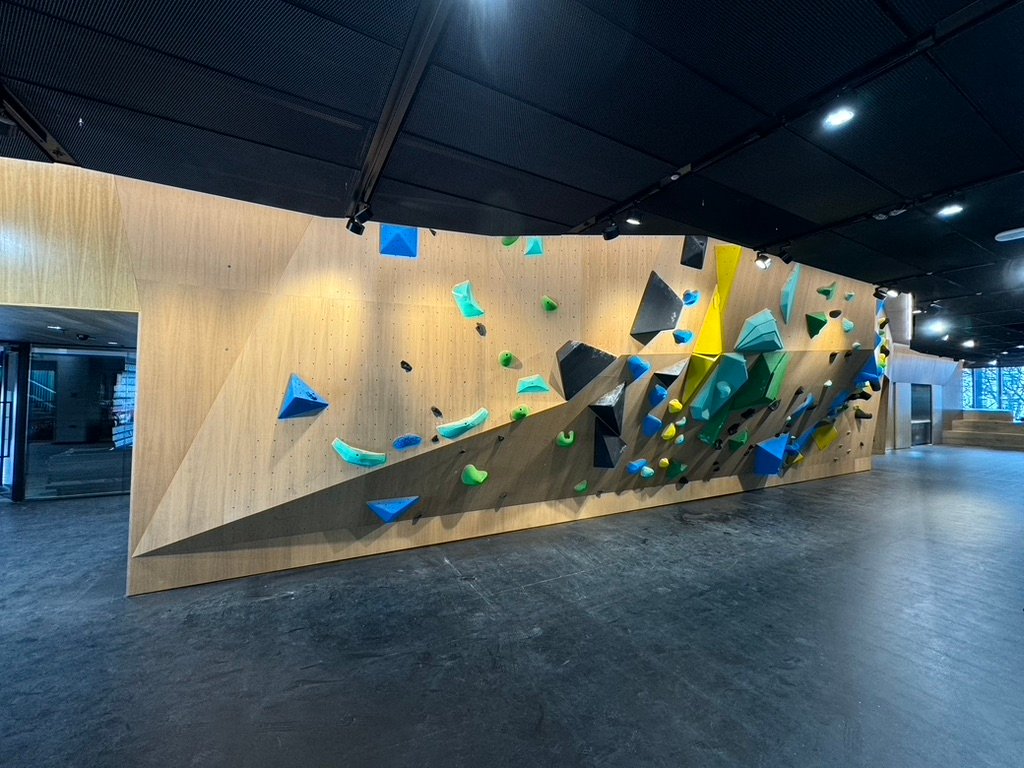
Give your students the wall that changes everything
Custom-built climbing walls for New Zealand schools — developing stronger bodies, sharper minds, and more confident learners. A year-round, weather-proof asset that works across PE, outdoor education, NCEA assessment and student wellbeing, every single day.
Why a climbing wall?
More than a wall. A launchpad.
New Zealand’s young people are facing a physical activity crisis. The 2022 Report Card on Physical Activity for Children and Youth gave our kids a C+ for overall activity — and with the third-highest child obesity rate in the OECD, our schools need physical activity options that students actually want to do.
That’s where climbing comes in. It isn’t just another PE activity — it’s a full-body, full-mind challenge that builds strength, problem-solving, resilience and teamwork all at once. It’s one of the fastest-growing sports in the world, an Olympic discipline since 2020, and one of the few activities that genuinely engages students who’ve never connected with traditional sport.
Benefits for students
Stronger bodies. Sharper minds. Better together.
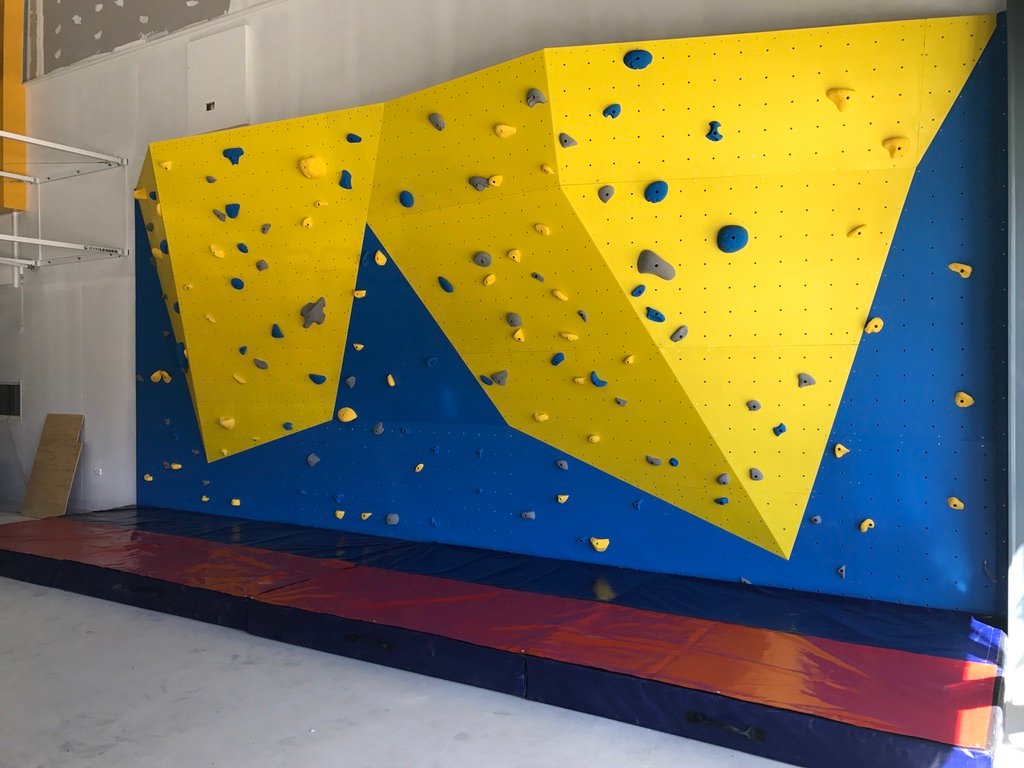
01 — Physical health
A full-body workout disguised as fun
Climbing is one of the most comprehensive physical activities a student can do. It engages every major muscle group — arms, core and legs working together to solve each route — building grip strength, cardiovascular fitness, flexibility and coordination all at once.
For students still developing their motor skills, it’s an exceptional way to improve balance, spatial awareness and whole-body coordination, all while having fun.
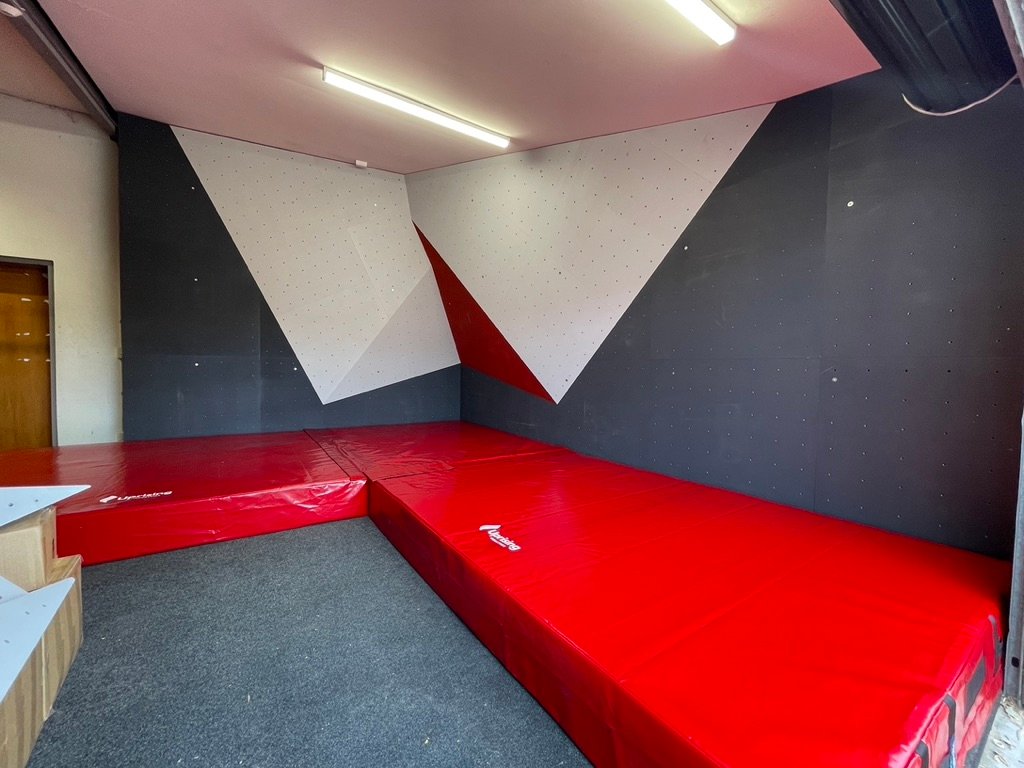
02 — Mental wellbeing
Building resilience, one hold at a time
The mental health benefits of climbing are backed by growing research. A 2024 study in Frontiers in Psychology found adolescent climbers showed significantly lower anxiety than non-climbing peers, while research from the University of Erlangen showed bouldering therapy reduced depression — with improvements stable even ten months on.
Every climb is a small exercise in managing fear, staying focused and pushing through challenge. Students learn that falling is part of the process — and that getting back on the wall is what matters.
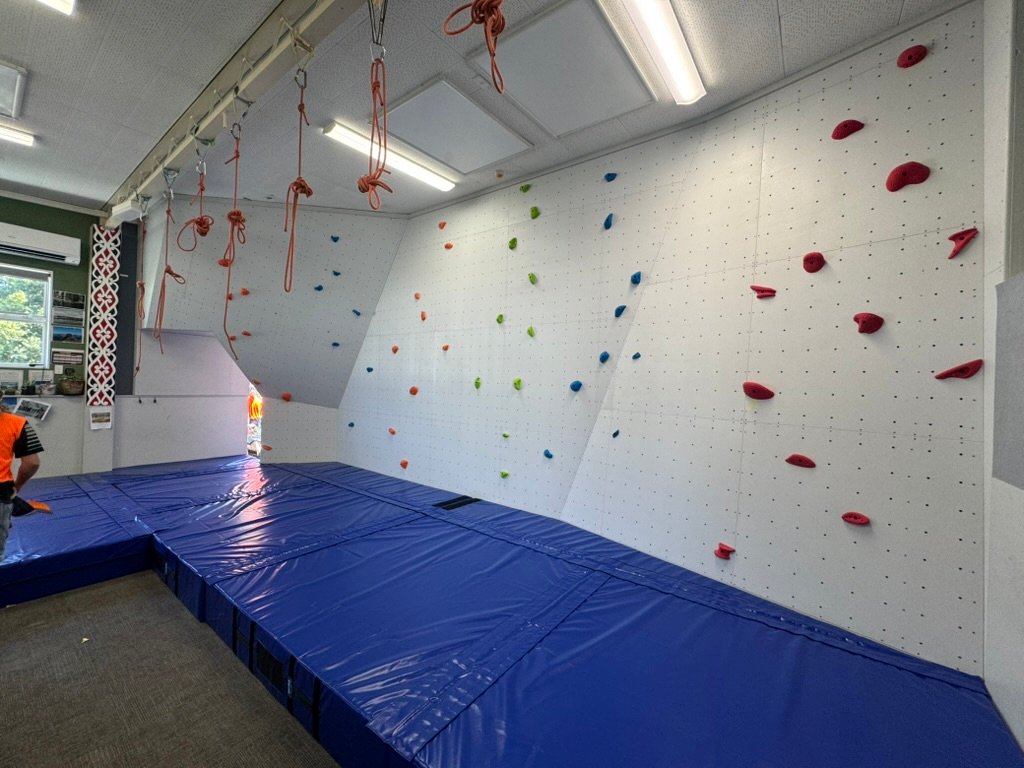
03 — Social & teamwork
Trust starts at the end of a rope
When one student holds the rope for another, something powerful happens. Belaying requires absolute trust, clear communication and genuine responsibility for someone else’s safety — lived experiences that build real relationships.
Climbing naturally fosters whakawhanaungatanga — the building of meaningful connections. Calling out beta, coaching a nervous classmate through their first top-rope, celebrating a send together: students develop communication, empathy and teamwork that extends well beyond the wall.
04 — Educational value
A classroom that happens to be vertical
Climbing is a physical puzzle. Every route asks students to read the problem, plan a strategy, execute it and adapt when things don’t go to plan — the same critical thinking we want in every subject.
The STEM connections are immediate: physics through friction and centre of gravity, geometry through route-reading, biology through energy systems. The cycle of attempt, fail, analyse, retry mirrors the scientific method perfectly — turning the gym into a cross-curricular teaching tool.
NCEA & curriculum alignment
Up to 17+ NCEA credits, on your wall
A school climbing wall isn’t just a PE resource — it’s a credentialed learning environment. Climbing is supported by dedicated NZQA unit standards and is a valid assessment context across Physical Education achievement standards at every NCEA level.
Climbing-specific unit standards
Rock climbing has its own registered unit standards under NZQA’s Outdoor Recreation framework — competency-based standards that can be assessed directly on your school wall.
Combine these with PE achievement standards (climbing is a valid context for AS 92016–92019 at Level 1) and the credits add up fast. These are graded standards that count towards University Entrance.
Perfectly aligned with the NZ Curriculum
The NZ Curriculum is built on hauora — holistic wellbeing — and climbing addresses every dimension, while developing the key competencies of thinking, managing self, relating to others, and participating and contributing.
Built for every student
Every student can climb
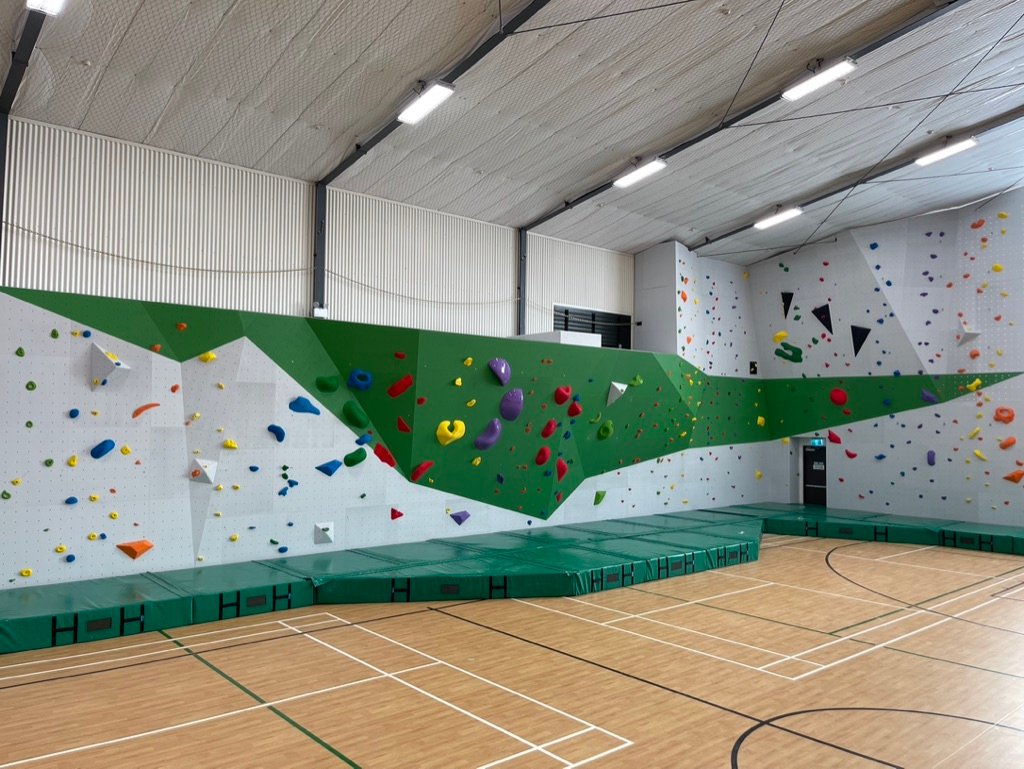
Not every student is a rugby player or a netballer. But climbing meets students exactly where they are. Routes can be set from beginner to advanced on the same wall, so students of completely different abilities can participate side by side — each working at their own level, progressing at their own pace.
For students who’ve historically disengaged from PE, climbing offers something different — novel, challenging and genuinely cool. It’s the kind of activity that brings students back to the gym who had otherwise checked out. And with climbing now an Olympic sport, your students might just be training for their future.
Traversing
Move sideways at low height with no ropes needed — accessible from ground level.
Bouldering
Removes the fear-of-heights barrier entirely, over deep safety matting.
Adaptive
Protocols make the wall accessible to students with physical disabilities or additional needs.
Sensory
Provides the proprioceptive input that supports internal regulation and focus.
Why ClimbCraft?
Built by climbers. Designed for schools.
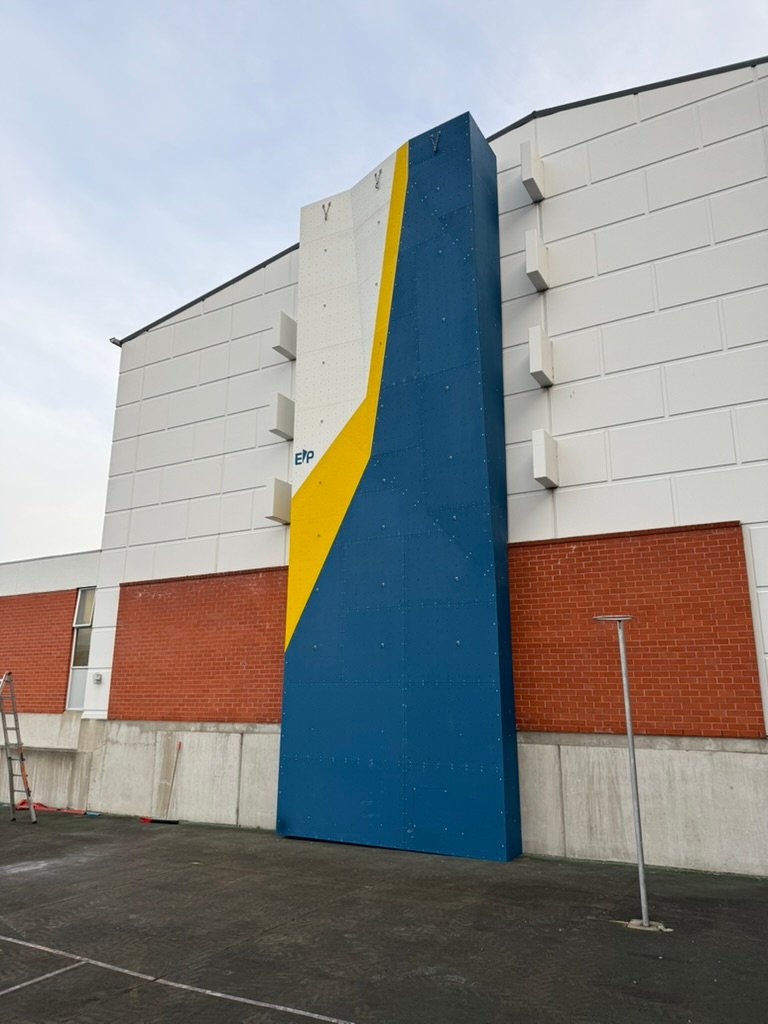
At ClimbCraft we design and build climbing walls specifically for the New Zealand school environment. We understand the unique requirements of schools — from safety compliance and space constraints to curriculum integration and long-term durability.
Design & build
Every wall is custom-designed for your space, your students and your programme goals — whether you’re fitting a traversing wall into an existing gym or building a dedicated climbing facility, we work with you from concept to completion.
Safety first
Our walls are engineered and built to meet AS 2316.1.1:2021, the Australia/New Zealand standard for artificial climbing structures — so safety is designed in from the very first sketch.
Ongoing support
A climbing wall is a long-term investment. We provide maintenance and inspection packages to keep your wall safe and performing at its best, year after year.
Frequently asked questions
Good questions
How much space do we need?
How much does a school climbing wall cost?
Do our teachers need special qualifications?
Is climbing safe for school students?
Can students with disabilities participate?
How does climbing fit into our timetable?
What maintenance does a climbing wall require?
Can we use the wall for NCEA assessment?
Ready to transform your school?
Let’s talk about your wall
Every school is different, and so is every climbing wall. Tell us about your space, your students and your goals — and we’ll show you what’s possible, with no obligation.
No obligation. We’ll come back to you with ideas and an indicative quote.